How do I avoid altitude sickness in Nepal?
You avoid it by going up slowly, resting on the way, drinking plenty and telling your guide how you feel. Nobody is immune, however fit they are. On my treks the pace is built for this, and I watch every person daily.
What altitude sickness is
The higher you go, the less oxygen there is in each breath. Your body can adjust, but it needs time. If you climb faster than your body can keep up, you start to feel unwell. That is altitude sickness. The mild form is common and usually passes with rest. The serious forms are rare but dangerous, and they are the reason I never rush the height gain. I am Lopsang, a licensed guide, licence No. 20007. This page is not medical advice.
Fitness gives no protection
Being strong in the gym does not protect you. A marathon runner can get sick and a slow walker can be fine. Age, training and past treks are no guarantee either way. Some people who felt great on day one struggle later, and some who worried the whole way up are fine. So I watch everyone the same way and I take the ascent slowly no matter how good you feel. Feeling fit is not the same as being adjusted to the height.
How high my routes go
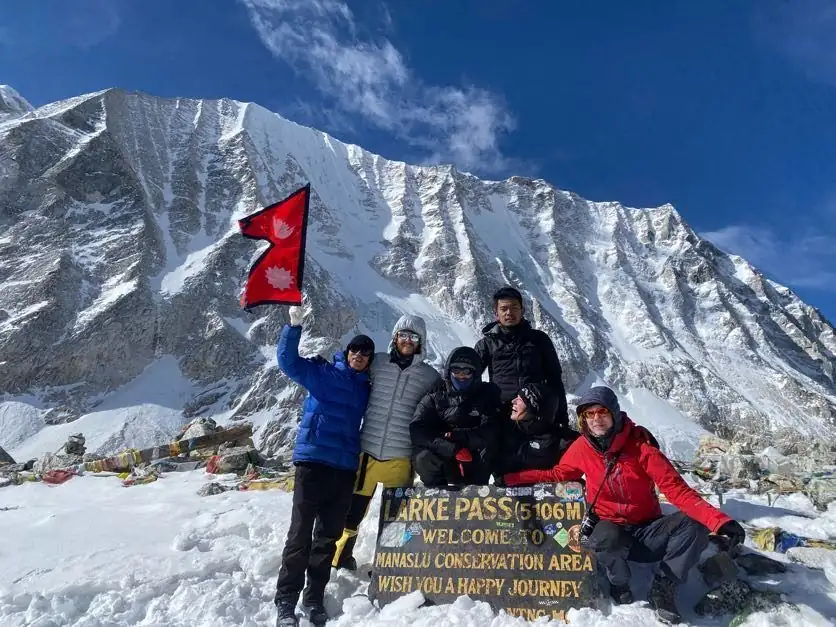
The treks I run reach real altitude, and the table shows the highest point on each route. That is the height your body has to get used to. The pass days are the hard part. On the Annapurna Circuit and the Manaslu Circuit you cross a high pass, and on Everest Base Camp you reach the highest point near the end of the trek. These are the days that ask the most of your body, so everything before them is built to get you ready.
| Trek | Highest point |
|---|---|
| Everest Base Camp | 5,545 m |
| Annapurna Circuit | 5,416 m |
| Manaslu Circuit | 5,106 m |
| Langtang Valley | 4,773 m |
| Langtang Gosaikunda | 4,600 m |
| Annapurna Base Camp | 4,130 m |
How I pace the climb
The best defence is a slow, sensible climb, and the itineraries I sell are already paced for it. We gain height gently each day and we do not skip stages to save a day. On the higher routes I build in rest days where we do not sleep any higher than the night before. Your body catches up on those days. On a rest day we often walk up to a higher point and then come back down to sleep. Climbing high and sleeping low helps you adjust.
Water and walking slowly
Two simple habits do a lot of the work. The first is water. I keep reminding people to drink plenty, because it is easy to forget when it is cold and you are not sweating much. The second is pace. We walk at a steady, easy pace. There is no prize for reaching the tea house first. Going slowly is one of the simplest ways to stay well. Eat properly too, even when you do not feel hungry, and get as much sleep as you can.
The warning signs I watch for
The early signs are usually mild. I watch for a headache that will not go away, feeling sick or not wanting to eat, feeling dizzy or unusually tired, and poor sleep. I also notice when someone goes quiet, drops off the pace or does not seem themselves. I ask people to tell me honestly how they feel. Hiding a headache to reach a pass helps nobody. If the signs get worse instead of better with rest, that changes my plan for the day.
How I monitor you
I carry a pulse oximeter and a first-aid kit on every trek. The oximeter is a small clip for your finger that gives me a quick reading. I use it alongside how you look and what you tell me, never on its own. I check people daily, and more often when we are high or after a big climb. None of this replaces a doctor. It is how I keep an eye on the group and spot a problem early. I also brief the group before we start so everyone knows what I am watching for.
When I turn back
If someone shows mild signs, we slow down, rest and see how they do. Often that is enough. If the signs get serious, there is only one right answer, and that is to go down. Losing height is the thing that works. I would rather bring you down safely than push on. On this call my decision is final. I say that clearly before every trek so nobody is surprised. A pass or a base camp is not worth your health. The mountain will still be there another year, and so will I.
What I'd suggest
Pick an itinerary with rest days built in and do not try to shorten it. See your own doctor before you book a high trek, especially if you have any heart, lung or other health condition, and ask them about anything you plan to take with you. I am a guide, not a doctor, so I cannot give you personal medical advice. Tell me honestly how you feel on the trail and I will do the rest.